Rust: How Admin Trolling With the New Animals Works
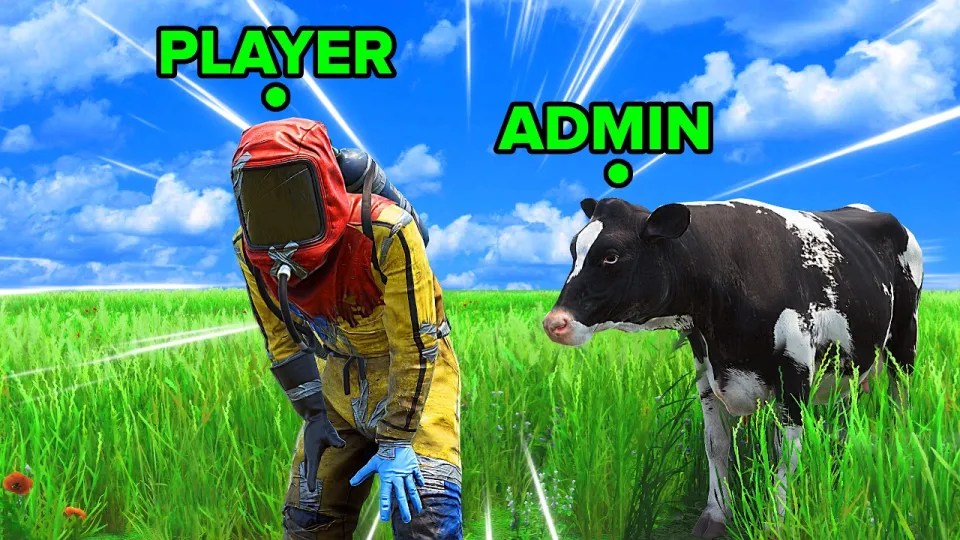
Video: Controlling The NEW Animals In Rust - Admin Trolling
Want articles like this for your own video to promote it on YouTube and Google? Order them through the Telegram bot @sat_sit_bot. It writes articles around your video, embeds the video and publishes them on popular niche websites (no ads). Try it free: 50 articles on us.
· based on the channel Enardo
Admin trolling with the new animals in Rust means an admin takes direct control of a creature — a cow, a turtle, a frog or a crab — and uses it to follow, block, stare at or ambush players instead of fighting them normally. Enardo and Lucas Battle built a whole session around it on a one-grid farming server and a 10x server, mixing animal possession with a horror-style "weeping angel" gimmick. The tools come from the same admin stack that powers server events, and grabbing a few Displates on sale with the Enardo discount is how the channel keeps those servers running.
What the new animals in Rust actually are
Rust's wildlife used to be a short list: bears, boars, wolves, pigs, chickens and horses on land, sharks in the water. The expanded roster adds farm and ambient creatures — cows and bulls, sheep, frogs, turtles and crabs — that behave less like threats and more like scenery with legs. That is exactly what makes them good trolling material: a bear chasing you is ordinary Rust, but a cow that walks into your base and stares at you is not.
Each animal has its own movement speed, hitbox and sound set, and those differences matter when an admin is puppeteering one. A crab scuttles sideways and is hard to read, a turtle is slow enough to be comical, a frog hops unpredictably, and a cow is large enough to block a doorway. Viewers noticed the model work too — one remarked that the level of detail on a cow's rear end suggests somebody was paid for hours of modeling, which is a fair summary of how much personality the new creatures carry.
How the animal-control trolling works
Controlling a creature is a matter of the admin taking ownership of an entity that already exists in the world and driving it manually, rather than spawning a scripted NPC. In practice the loop looks like this:
- Pick a target — usually a player farming quietly in a grid or a small group building a base.
- Spawn or locate an animal near them, choosing a species that fits the joke (cow for bulk, frog for movement, crab for weirdness).
- Possess the animal and move it with admin flight, so it appears to walk, hop or drift toward the player.
- React in voice chat or text as the animal — the comedy is in the player trying to work out whether this is a bug, an event or a person.
- Escalate: more animals, closer proximity, or a sudden swarm once the player relaxes.
Because the admin is flying while puppeteering the creature, the animal can do things the AI never would — stand perfectly still at a window, follow a player through a door, or line up in a row. The video's opening shot, with a laser sight trained on Lucas's forehead, sets the tone: this is staged chaos rather than a fair fight.
The weeping angel trick and other horror bits
The standout gimmick is the weeping angel: an animal that only moves when nobody is looking at it. The admin freezes the creature whenever a player's camera is on it and advances the moment they turn away, turning a cow or a turtle into a slow-motion stalker. It works because Rust players are conditioned to read animal movement as AI pathing — a creature that stops dead when observed breaks that expectation instantly.
A viewer suggested the same mechanic could be applied to scarecrows, which is a genuinely good idea: a static prop that relocates between glances would be cheaper to run than a full animal and just as unsettling. Other bits in the session lean on the same principle — absurdity plus persistence. A turtle that follows a player around a base asking, in effect, who they are, is funnier than any explosion because the victim has no counterplay except walking away.
Spawn volume, lag and admin etiquette
The most repeated piece of feedback on the video was about restraint: spawn a few strange animals first, let players get unnerved, and only then go all-out. Ten cows materialized around one player got the biggest laugh, but it also illustrates the risk. Every possessed or spawned entity costs server ticks, and a one-grid farming server with a small population will feel a hundred animals immediately.
A practical ceiling for this kind of event:
- Keep simultaneous custom spawns in the low dozens on a small server, and clean them up when the bit ends.
- Prefer possessing existing wildlife over spawning new entities where possible.
- Announce that an admin event is running so players do not file cheat reports against a legitimate tool.
- Avoid spawning inside bases or blocking spawn points, which turns a joke into a lost wipe for the victim.
- On a 10x server, expect players to be far more armed and far less patient — keep the trolling short.
Questions players ask about animal trolling
The recurring confusion is about legitimacy. Players who meet a controlled animal often assume they have found a glitch or a hacker, and the answer is usually simpler: on community servers, admins have entity and flight permissions that let them do this openly. The second recurring question is whether the animals are dangerous — most of the new species are not, which is why they work as props rather than threats, while bears, boars and wolves still kill on contact.
A third theme is scale. Players enjoy the concept but warn that over-spawning ruins the surprise and tanks performance, so the best-received moments are small: one strange animal behaving wrongly, not a stampede. Finally, console players ask whether the same tricks exist on their version — animal control is an admin-side capability, so it depends on whether the server operator has access to those commands, not on the platform itself.
All the links from the video
- Displate discount (1 for 22% off, 2 for 27% off, 3+ for 33% off): https://displate.com/l/enardo
- Enardo's servers: https://enardo.gg
- Merch: https://enardo.store
- Discord: https://discord.gg/enardo
- Twitch: https://www.twitch.tv/enardo
Conclusion
Animal control is one of the cheapest and most effective admin tools in Rust right now: it needs no custom plugins, it scales from a single staring cow to a full swarm, and it produces moments players remember longer than most raids. The weeping angel idea and the ten-cow ambush show how far a simple possessed entity can go when the admin commits to the bit. Keep the spawn counts sane, clean up afterwards, and the joke lands without wrecking the server. This breakdown is based on the video by Enardo, who runs these admin sessions with Lucas Battle — if you want to support that work, use the Displate sale link for 22% off one, 27% off two, or 33% off three or more.
Key takeaways
- Rust's animal roster expanded to cows, bulls, sheep, frogs, turtles and crabs alongside bears, boars, wolves, pigs, chickens, horses and sharks.
- Enardo and Lucas Battle ran the animal-control trolling on Enardo's one-grid farming server and a 10x server.
- The weeping angel trick makes an animal freeze while watched and move only when players look away.
- One clip spawned ten cows around a single player, which viewers called the funniest moment of the video.
- Admins can possess and move animals, but spawning dozens at once risks server lag and player reports.
Questions & answers
Can regular players control animals in Rust, or is this admin-only?
Possessing and steering a creature is an admin-side capability, not something a normal player can do. On community servers the operator grants those permissions, so what looks like a glitch or a hacker is usually a staff member running an event. On official servers you will not see it.
Are the new animals in Rust dangerous?
Most of the newer additions — cows, bulls, sheep, frogs, turtles, crabs — are ambient creatures that will not hunt you. The classic predators still do: bears, boars and wolves deal real damage, and sharks remain a threat in open water. The new species are useful precisely because they are harmless and therefore strange when they act deliberately.
Why do admins sometimes spawn dozens of animals at once?
It is a comedic escalation, and the ten-cow pile-up around one player was the most quoted moment of the session. The trade-off is performance: each entity costs server ticks, so on a small one-grid server a large spawn can cause lag. The better-received approach is a few odd animals first, then a bigger swarm once players are confused.
What is the weeping angel trick in Rust?
It is an admin bit where an animal stays frozen while a player is looking at it and moves only when they look away. It plays on the assumption that wildlife moves on AI pathing, so a creature that stops dead when observed feels wrong immediately. Viewers have suggested applying the same idea to scarecrows.
Source: Controlling The NEW Animals In Rust - Admin Trolling · Markdown version